


Separator internals





Example of solution
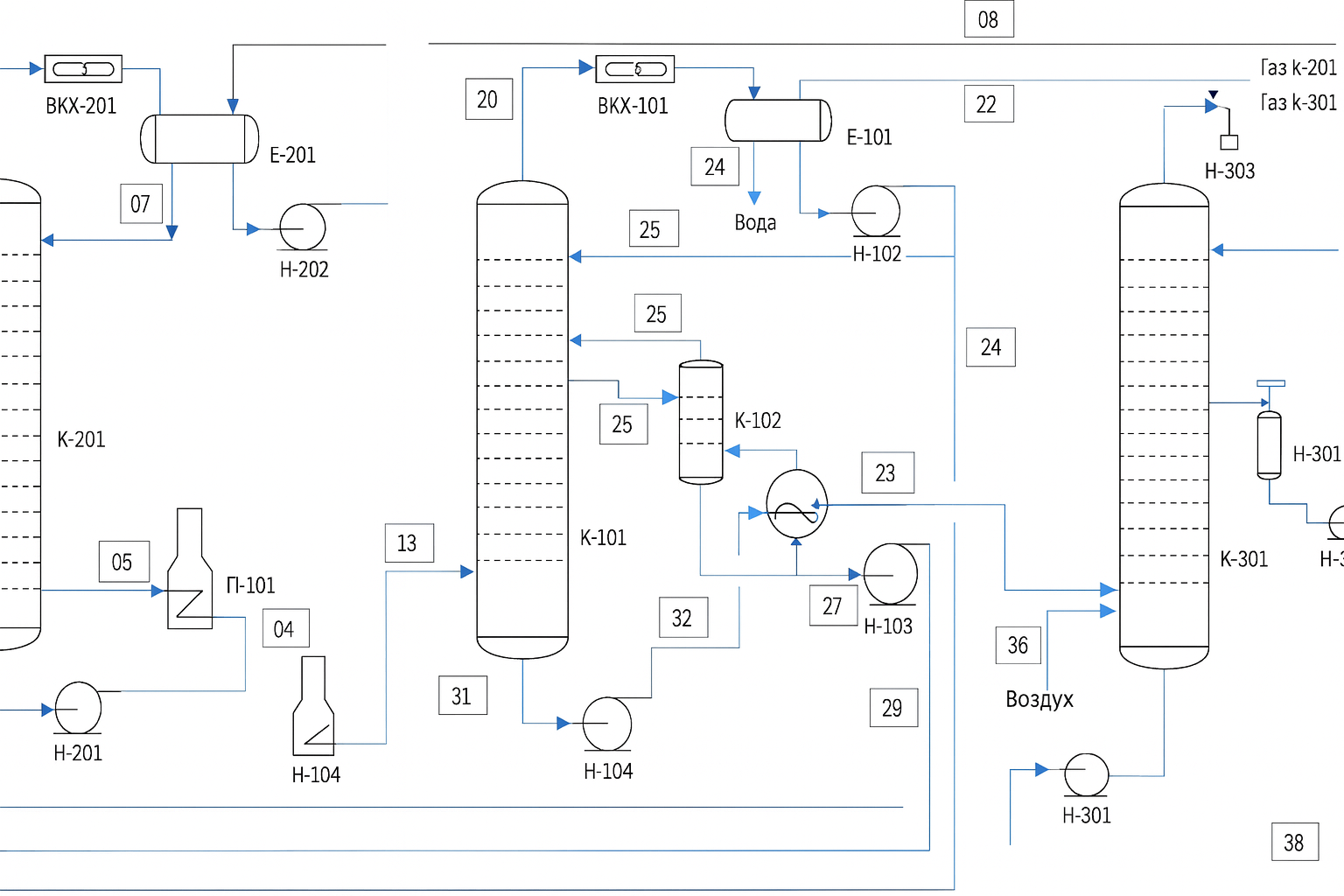
Customer request:
The small-capacity AVT-200 atmospheric-vacuum distillation unit requires revamping to improve its operating efficiency.
Spliteks solution:
- Process flow analysis, calculations and coordination of solutions with the customer
- Engineering with maximum use of the existing shells
- Manufacturing at the facility in Serpukhov
- Delivery of the batch to the customer’s site
- Installation supervision at the customer’s site and advice during commissioning
Do you have any questions?
Separator internals
Spliteks (formerly Sulzer Chemtech LLC), as a leading Russian manufacturer of separator internals, pays particular attention to the development and manufacture of components that ensure efficient separation in equipment used in the oil and gas and chemical industries. Separator internals are designed to optimise separation processes, helping to increase the capacity and separation efficiency of separation equipment. The Serpukhov plant is equipped with modern machinery for manufacturing internals for various types of separators. The products comply with the customer’s standards and requirements.
Operating principles of internals
The basic operating principle of such devices is the separation of media under the action of gravitational, inertial and centrifugal forces. During separation, the mixture flow passes through special devices that improve phase separation efficiency. For example, internals installed in centrifugal separators create a spiral flow through a vortex effect, promoting the separation of gas from liquids due to the difference in density. This makes it possible to efficiently remove oil, water or contaminant particles from the gas flow.
Gas separators are designed to remove entrained liquid droplets from a gas flow by coalescing moisture on the internals. Similarly, liquid-liquid separators are designed to mechanically separate two immiscible liquids from each other. A set of plates with fixed spacing may be used for separation, reducing the distance required for droplets to settle and improving the coalescence process. This mechanism ensures stable equipment operation even under high loads.
Design and component types
The variety of internals types makes it possible to adapt them to specific applications. The Spliteks product range includes:
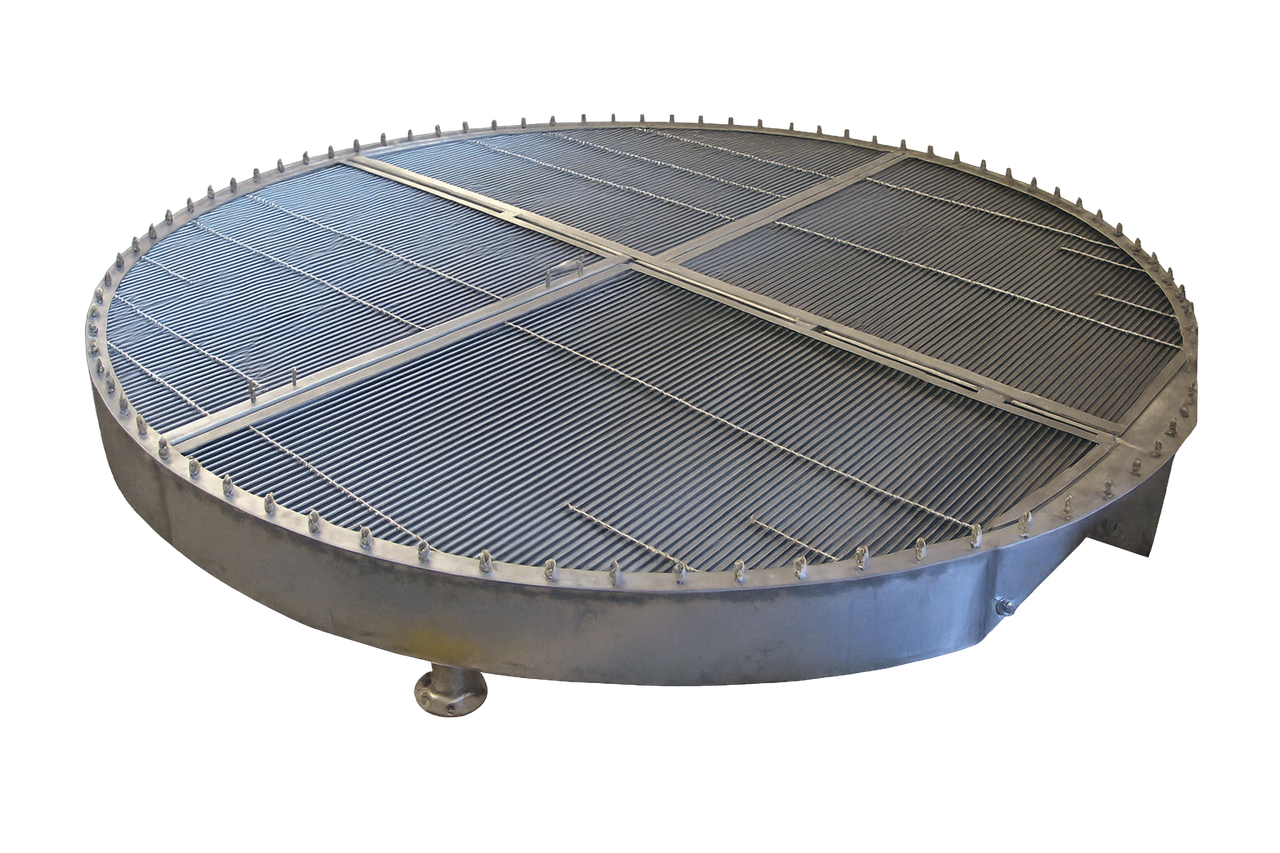
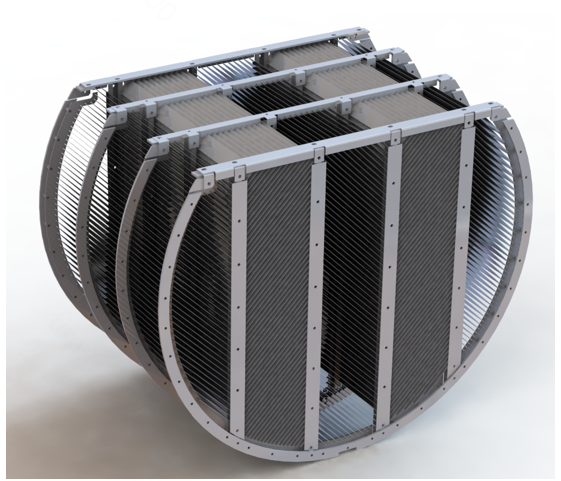
- Mist eliminators (SplitMesh, SplitChevron) designed for efficient separation of liquid droplets under various operating conditions and across a wide load range;
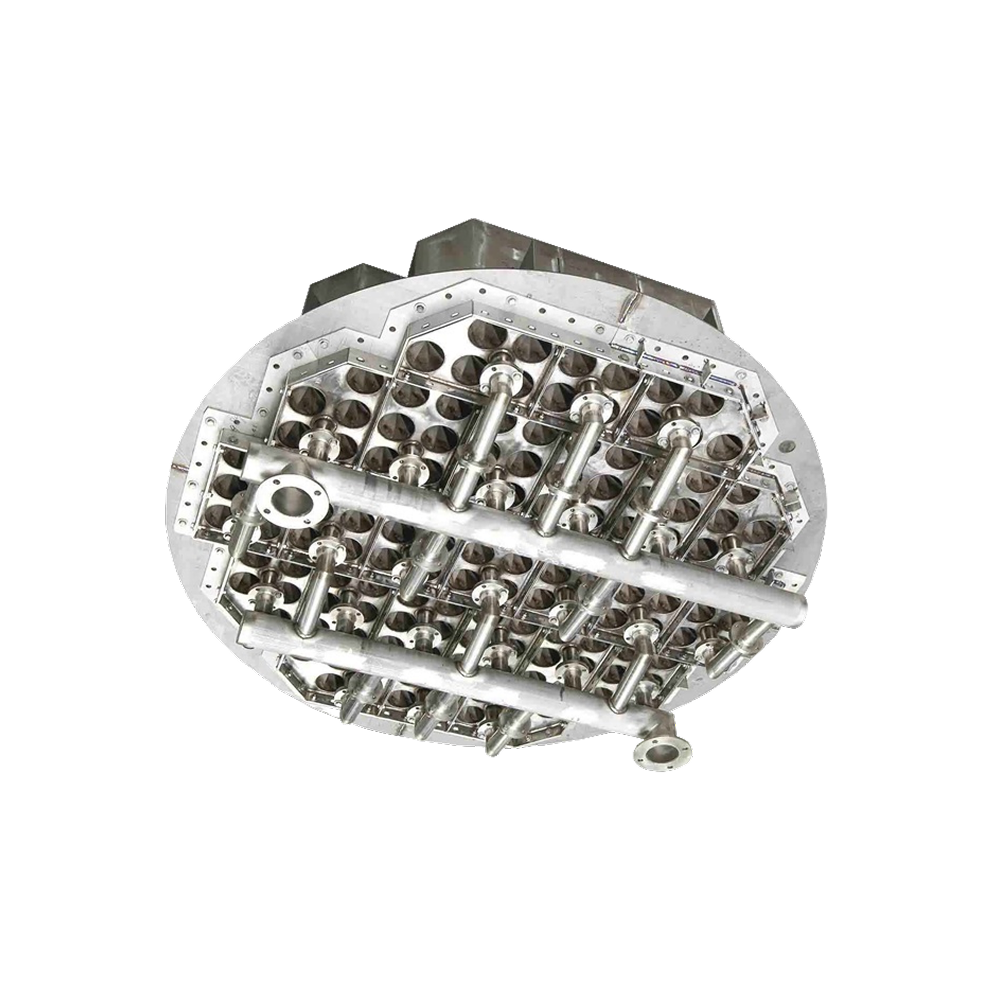
- Centrifugal separation devices such as SplitSwirl, which provide maximum gas and liquid capacity and consist of a tray fitted with cyclones and a drainage system beneath it;
- Coalescers (SplitPlate, Mesh Split DC) used to separate two-phase liquid-liquid systems
- Multi-cassette devices (SplitMCS) combining the high capacity of cyclone devices with the separation efficiency of mesh-type devices;
- Inlet devices (vane type, HP) providing optimal primary distribution.
Separator internals are made of high-strength, corrosion-resistant steels capable of withstanding aggressive media and mechanical loads typical of the oil and gas and chemical industries.
Applications in the oil and gas and chemical industries
Spliteks manufactures separator internals that are widely used in many industries, including gas processing, petrochemicals, oil refining and ammonia production.
The broad product range makes it possible to achieve the required separation quality across a wide load range.
Spliteks internals can be used with contaminated and aggressive media and at high pressure, when upgrading existing separators to increase capacity and separation efficiency, and when increasing separator capacity without increasing its diameter while maintaining separation quality.
Spliteks internals are used in separators for primary gas treatment, reflux drums of distillation columns, three-phase separators, crude oil treatment units, natural gas dehydration absorbers, compressor and turboexpander inlet separators, ammonia secondary condensation separators, for separating organic fractions after stripping and water-washing processes, in extractors and mixer-settlers, and in oil and gas separators that provide optimal primary distribution of the gas-liquid flow.