


Process and hydraulic calculations
Key Services
Spliteks performs
- comprehensive studies to improve the uniformity of temperature-field and concentration distribution and to determine flow velocities and pressure drops in different reactor zones and cross-sections
- modelling of dispersed-phase transport in separators, including determination of process efficiency and transient effects
- detailed modelling of two-phase flows on various tray types and in packed beds of column equipment
- visualisation and quantitative analysis of stagnant and flooding zones and determination of irrigation uniformity across the column cross-section or liquid distribution onto a tray
- calculation of hydraulic resistance and mixing efficiency in mixing equipment.
- thermal and hydraulic flow analysis in heat exchangers, including optimisation of the heat-transfer surface geometry and allowance for phase transitions
Spliteks performs:
- mechanical-strength calculations for column and vessel internals individually for each project, taking account of the process and equipment specifics
- mechanical-strength and vibration-resistance calculations for trays (1-, 2- or 4-pass)
- mechanical-strength calculations for welded attachments on column and vessel shells
Results & Benefits
Value for You
Example of solution implementation
Client request:
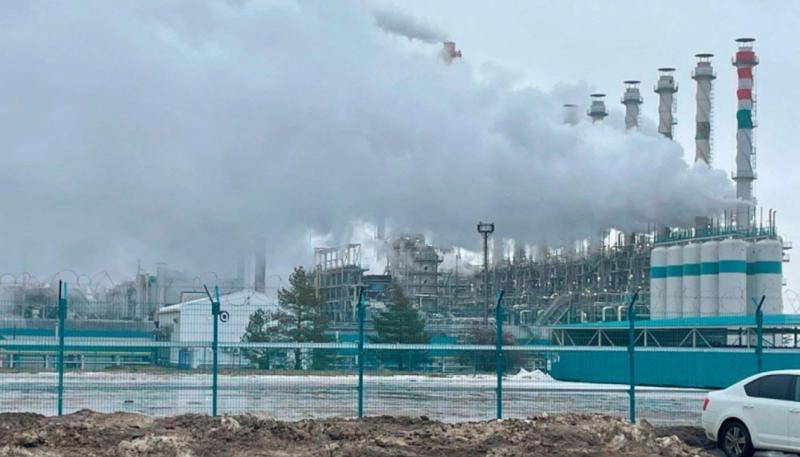
Urgent replacement of the damaged internals of columns K-14 and K-16 at the EP-300 unit is required.
Spliteks decision:
- Design and engineering
- Coordination with the manufacturers of the new column shells
- Expedited manufacturing at the facility in Serpukhov
- Delivery of the batch to the customer’s site
Process and hydraulic calculations by Spliteks
As a technology and engineering company, Spliteks performs process and hydraulic calculations on the basis of feedstock data and required product quality information provided by the Customer. These calculations help ensure optimum equipment operation, minimise energy consumption and maintain stable operating conditions in equipment used in the oil and gas, petrochemical and chemical industries.
Main aspects of process and hydraulic calculations
Process calculations analyse equipment operating conditions and determine the main process parameters, including the number of trays, random-packing bed height, load factors, reflux ratio, etc. Specialised modelling software takes account of feedstock composition, temperature conditions and load data.
Hydraulic calculations verify operating conditions (liquid/vapour loads) in order to prevent undesirable flooding or weeping. The hydraulic resistance of the column internals, uniformity of vapour and liquid flow distribution, and operation at maximum and minimum loads are checked.
CFD modelling for complex processes
CFD analysis is used to investigate liquid and gas flow behaviour in reactors, separators, columns and heat exchangers. Modelling makes it possible to study and improve the uniformity of temperature and concentration fields and to determine flow velocity and pressure drop in different zones of reactor equipment. CFD analysis helps resolve problems in packed and tray column operation, such as uneven irrigation or the formation of stagnant and flooding zones.
For mixers, mixing efficiency is calculated, while thermal and hydraulic calculations are performed for heat exchangers, taking account of phase transitions and heat-transfer surface area.
Finite element analysis of structural strength
The finite element method is used to assess the mechanical strength of internals. Tray resistance to vibration and loads is calculated. This includes analysis of the main shell components, taking account of process factors such as pressure and temperature.
Finite element analysis supports the design of equipment whose strength characteristics determine safety. Operating scenarios are modelled for multi-pass trays to minimise deformation risks.
Resolving typical equipment operating problems
Problems in packed-column operation are often associated with uneven liquid distribution, which reduces efficiency. Verification of operating ranges and analysis of the process parameters of the media in the equipment identify the causes, on the basis of which optimisation solutions are proposed.
Column operating problems—for example, in atmospheric or vacuum columns—may manifest as excessive pressure losses. Hydraulic-calculation results can be used to optimise medium distribution across the column cross-section and change the internals configuration.
Spliteks is a reliable partner for complex process challenges.