


Installation
Key Services
Results & Benefits
Value for You
Example of solution implementation
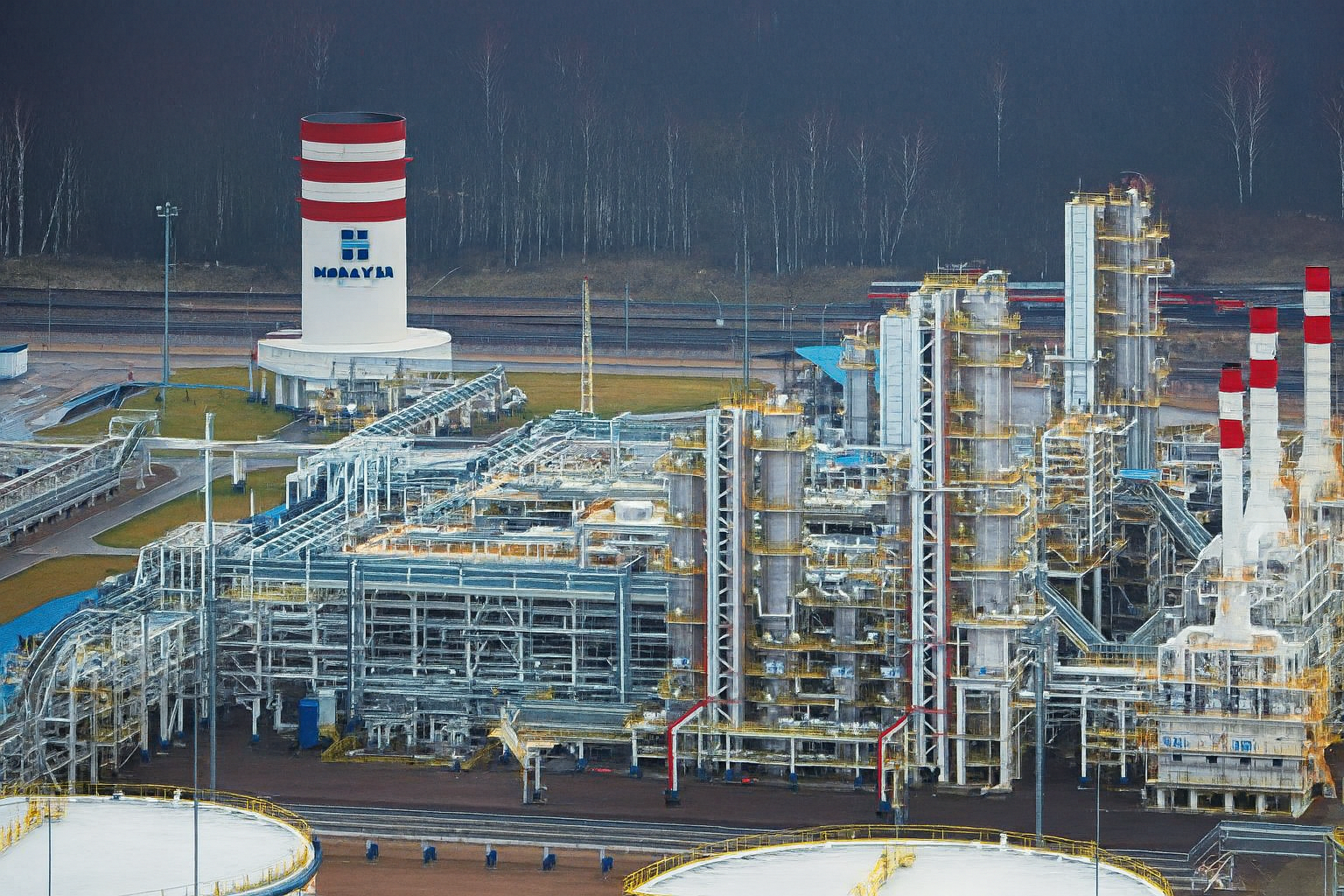
Client request:
Manufacturing and supply of column internals for three phases of a stable gas condensate fractionation and transshipment complex at the port. Urgent supply and installation of column internals for the damaged main fractionator of Phase 2
Spliteks decision:
- Design and engineering. Optimal process operating conditions were calculated to achieve the guaranteed capacity and product quality.
- Manufacturing in Serpukhov. A complete set of main fractionator internals was manufactured within 1 month and delivered to the customer’s site
- Installation. Replacement of the damaged internals of the main fractionator was completed within 1 week, with the required guarantees provided.
Integrated solutions (engineering, manufacturing and installation) made it possible to promptly replace the equipment in an emergency, significantly reducing the customer’s losses caused by unit downtime.
Quality control at every stage: from welding to heat treatment
High-quality installation begins with the thorough preparation of equipment components. Semiautomatic welding is widely used at the manufacturing site to provide reliable joints between parts made from different grades of steel. Post-weld heat treatment is mandatory for critical assemblies and vessels operating at high pressure, as well as when hydrogen sulphide is present in the process medium. This procedure relieves residual stresses caused by welding and restores the metal’s original properties, which directly affects operational safety.
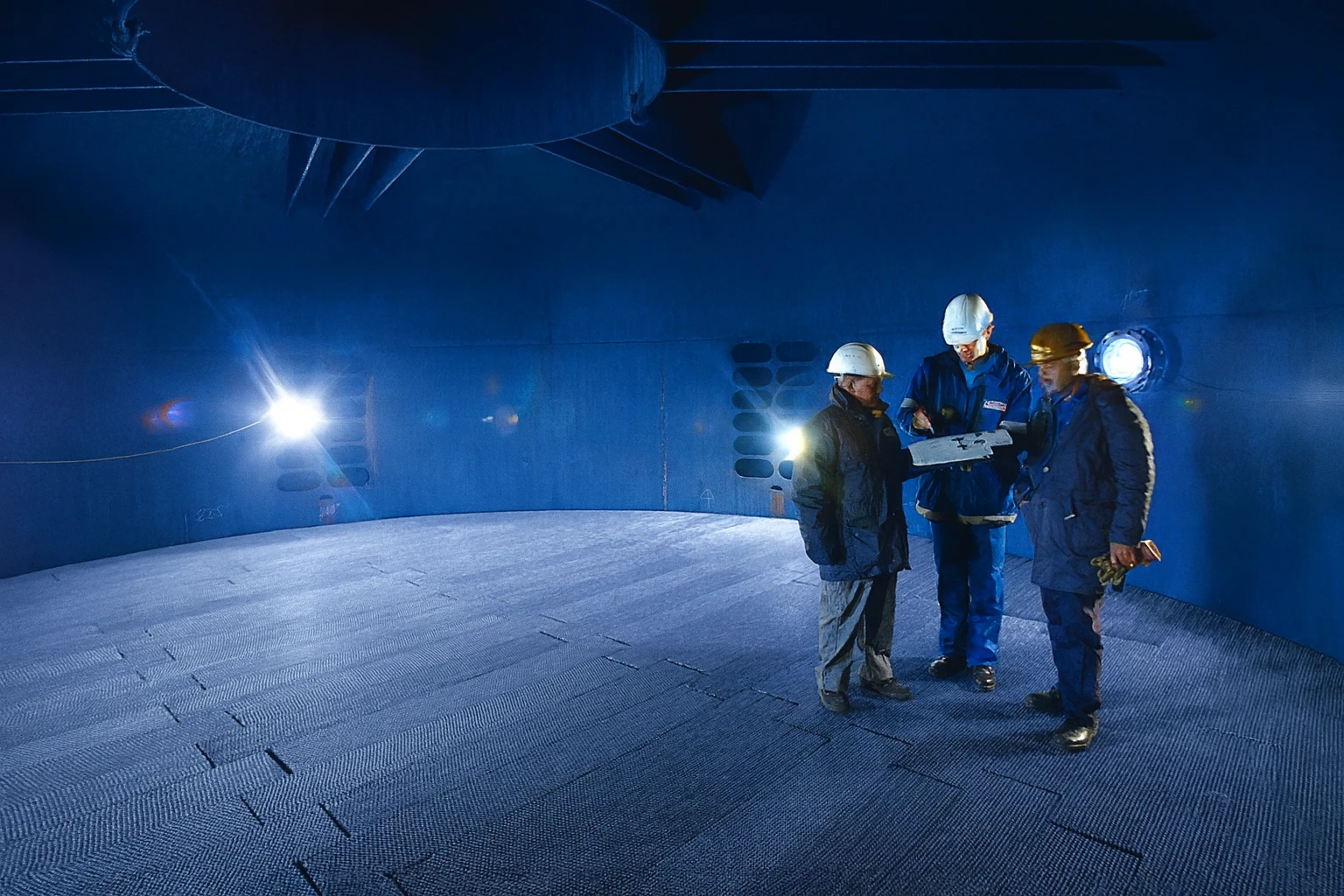
Installation of internals in column equipment
The installation of internals in columns begins by using a geodetic survey to check that the unit has been correctly installed on its foundation. The vertical alignment of the unit and the tightening of the anchor bolts are checked and documented in a report. The level of the supports is then checked if they were welded at the manufacturer’s plant, or the positions of support rings to be welded are marked out. The next stage is the installation of the internals, on which the efficiency of the mass-transfer processes directly depends.
The main technical requirements for this stage include:
-
Horizontal alignment of trays inside the column.
-
Assembly of internals in accordance with the installation instructions.
-
Secure fastening of the devices to prevent vibration during the process.
The company’s specialists install mass-transfer column trays—sieve, valve and bubble-cap trays—with particular care. The separation performance of the column, and therefore the purity of the products obtained in the unit, depends on the accuracy with which the internals are assembled.
Installation team expertise and technical equipment
High-quality work is ensured by professional teams specialising in the installation of internals. The welders are NAKS-certified, while the fitters hone their skills not only at customer sites but also in the company’s own workshop during the manufacture and trial assembly of internals. In addition to assembly itself, the teams provide a full range of services: from equipment cleaning to installing nozzles in accordance with the customer’s design, tightening flanges to the specified torque, machining the sealing faces of flanges and manways, and restoring the cladding layer.
All construction codes and regulations are strictly observed when the work is organised, and the installation method statement includes detailed lifting arrangements for the main internal components and scaffolding.