


Vane-type inlet device


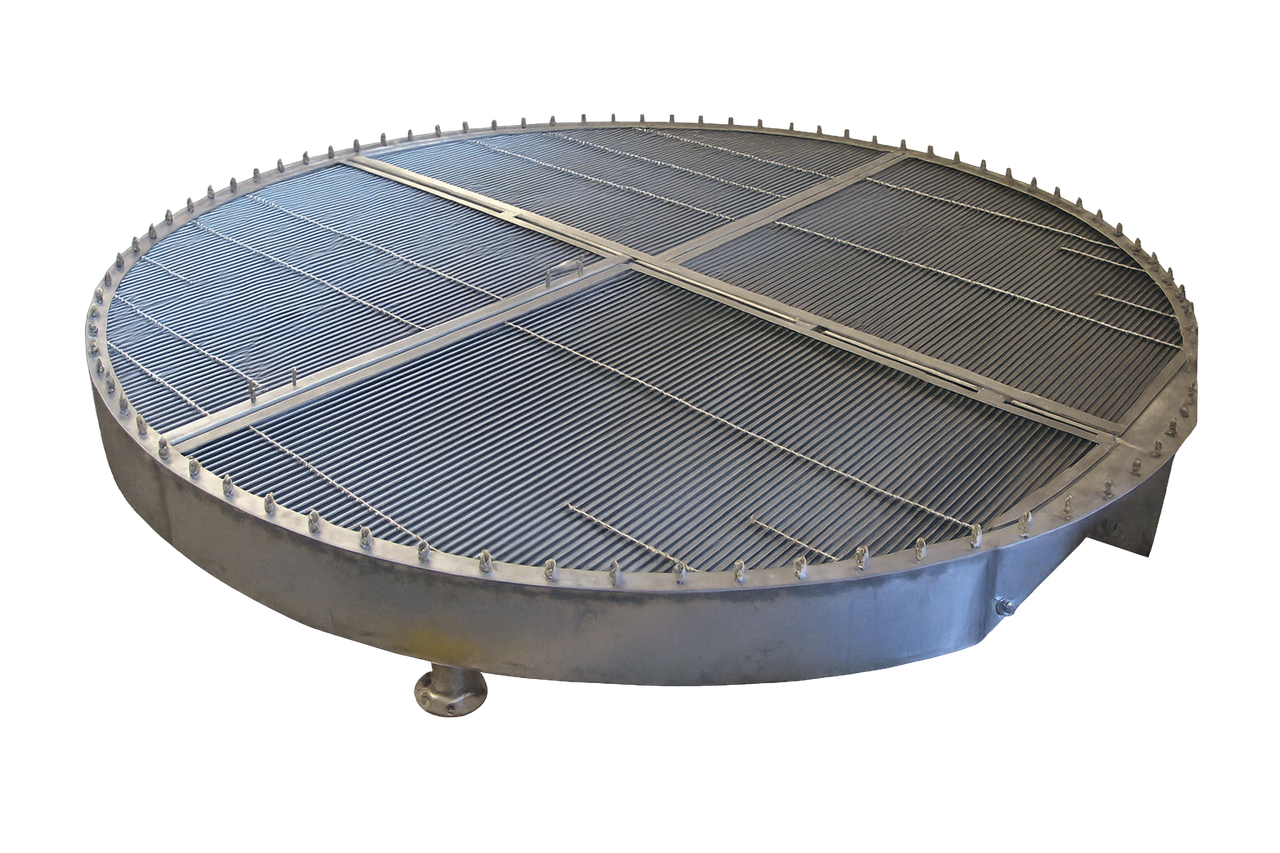
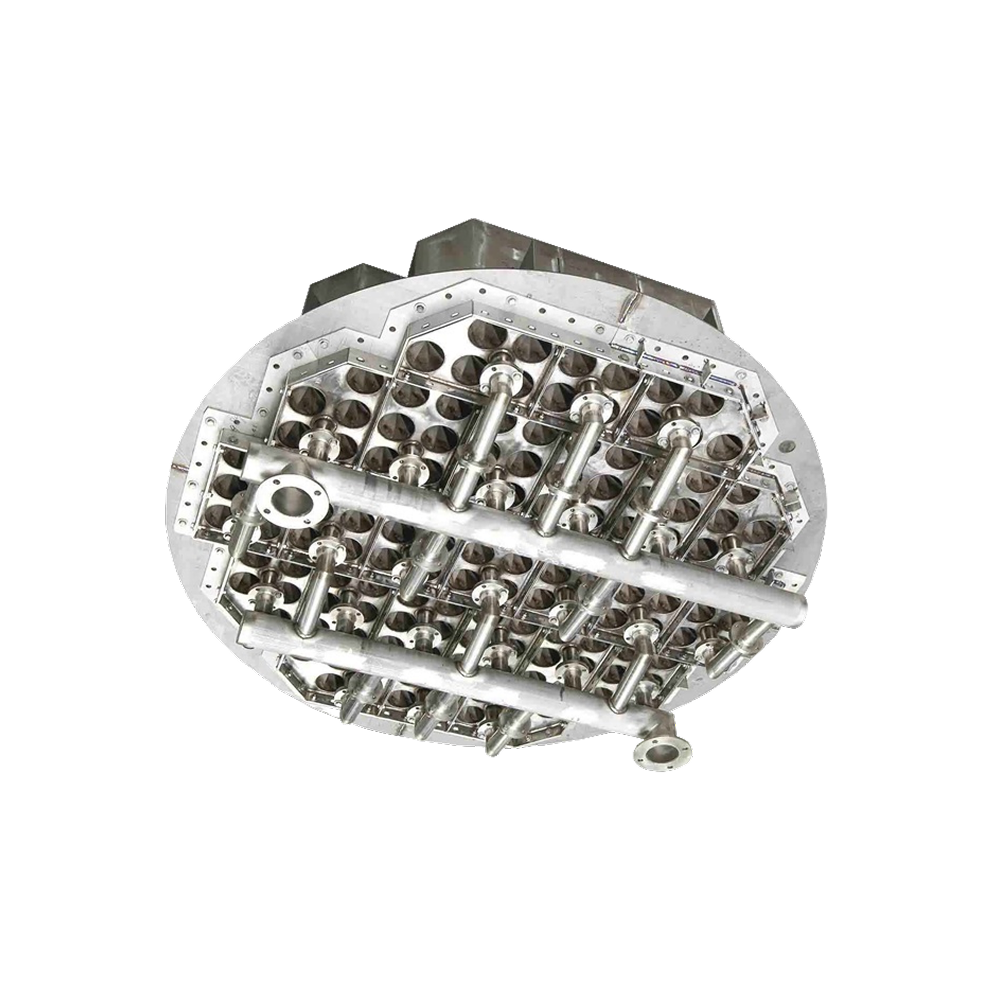
The vane-type inlet device is a key component of an oil and gas separator, providing efficient primary separation of the gas-liquid mixture. Its function is to receive the pressurised flow, reduce its kinetic energy, initiate separation and distribute the phases uniformly across the vessel cross-section. The devices are manufactured from corrosion-resistant materials (stainless steels and nickel alloys), ensuring durability under aggressive operating conditions. The operating principle is based on the combined action of physical effects: the vanes swirl the flow so that centrifugal forces throw the liquid phase towards the periphery while the gas is concentrated in the centre. At the same time, flow velocity decreases, promoting gravitational settling: liquid droplets fall to the bottom of the separator under gravity. This arrangement provides up to 80% primary separation efficiency for large droplets, significantly reducing the load on subsequent separation stages.
The device is versatile and can be used in both vertical and horizontal separators, operating effectively even with a high gas fraction in the flow (up to 90%). Its key advantages are minimal pressure drop (0.01–0.05 bar), resistance to fouling, ease of maintenance, and compliance with international standards (API, ASME) and Russian GOST standards. The vane-type inlet device is a reliable solution for oil and gas treatment units, flare separators and three-phase flow-separation systems, enabling optimisation of the separation process from the very beginning of the process cycle.
The device is versatile and can be used in both vertical and horizontal separators, operating effectively even with a high gas fraction in the flow (up to 90%). Its key advantages are minimal pressure drop (0.01–0.05 bar), resistance to fouling, ease of maintenance, and compliance with international standards (API, ASME) and Russian GOST standards. The vane-type inlet device is a reliable solution for oil and gas treatment units, flare separators and three-phase flow-separation systems, enabling optimisation of the separation process from the very beginning of the process cycle.
Fields of Application
Advantages
Provide preliminary separation of gas and liquid at the separator inlet
Reduces the load on downstream sections (mist eliminators, coalescers)
Increases overall separation efficiency through uniform flow distribution
CFD-based internals development enables selection of the optimum vane geometry
Compliance with international API and ASME standards and Russian GOST standards
Adaptation to your specific process parameters (flow rate, pressure, mixture composition)


Do you have any questions?
We will provide a consultation, calculate the cost and answer all your questions
Element is not found